
Gaussian Technology
Physics-based forecasting for faster, more defensible reservoir and well decisions
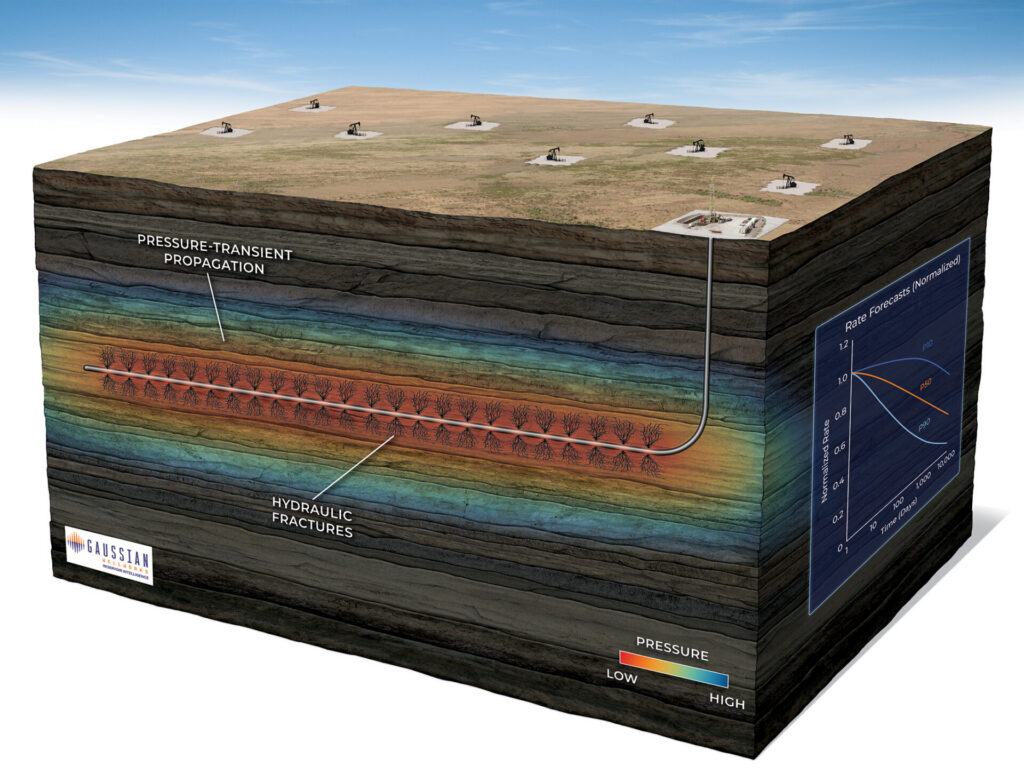
Gaussian Wellworks uses proprietary Gaussian Pressure Transient (GPT) technology to forecast well and reservoir performance using physics-based analytical solutions.
Technical Advantage
Instead of relying primarily on backward-looking decline-based approaches and trends, GPT models reservoir pressure behavior directly to generate faster, more technically defensible forecasts.
Decision Value
By linking pressure behavior, flow response, and engineered well design, Gaussian helps operators evaluate production performance, completion effectiveness, and development options earlier in the asset life cycle.
The Industry Limitation
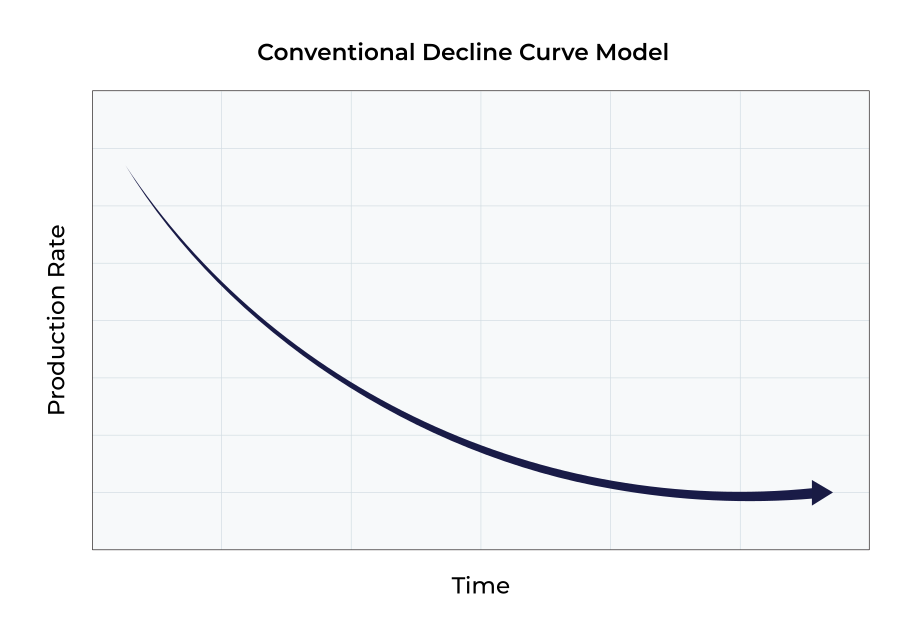
Operators need forecast confidence before they commit to drilling, completion, reserves, and capital. Traditional production forecasting methods such as Arps and other decline-curve approaches remain widely used because they are simple and familiar, but they are fundamentally limited.
Empirical dependence
- Arps and traditional DCA are backward-looking and rely heavily on production history and analog assumptions.
Physics enters late
- Pressure behavior, fracture interference, and completion effects are not directly captured by simple decline trends.
Screening speed gap
- Full-field simulation is powerful but can be too data-intensive and slow for early portfolio decisions.
6-18 months
- Traditional workflows need long production histories for reliable long-term forecasts; operator decisions often cannot wait that long.
Limited adaptability
- Have difficulty adapting when completion designs, play conditions, or the quality of analogs change.
The Gaussian Solution
GPT connects pressure behavior, flow response, and engineered well design in a single analytical framework.
- Solves pressure-transient behavior caused by production or injection
- Uses closed-form, gridless analytical solutions for fast iteration
- Computes pressure gradients, drained volume, rates, and cumulative production
- Estimates fracture dimensions and effectiveness from field data
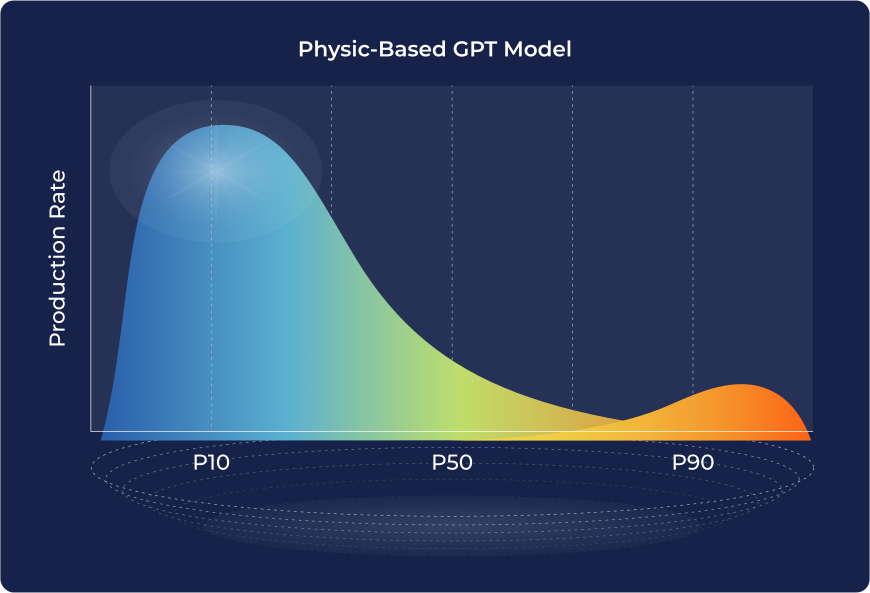
- Supports P90/P50/P10 forecasts and scenario comparison
The result is a direct connection between reservoir behavior, completion design, and forecasted performance.
What Makes Gaussian Different
The difference is not only speed. It is a different technical basis for forecasting and asset evaluation.
Legacy workflows
- Backward-looking curve fitting
- Dependent on production history and analogs
- Weak visibility into pressure and fracture effects
- Full simulation can be slow for screening
-
Single-case results can hide uncertainty
Gaussian technology
- Pressure-transient physics modeled directly
- Validated with as little as 30 days of production data
- Fast, gridless analytical solutions
- Fractured/unfractured, bounded/unbounded, production/injection cases
- Explicit P90/P50/P10 uncertainty and scenario comparison
- Represents constant bottomhole-pressure operation and artificial lift
- Models pressure interaction among multiple fractures and wells
- Represents isotropic and anisotropic diffusivity behavior
Using Gaussian technology results in earlier forecasts, stronger technical defensibility, and clearer links between subsurface behavior and business decisions.
Where Gaussian Creates Value
Earlier Forecasting
Predict production before wells are drilled and accelerate development planning
Better Decision-Making
Evaluate reservoir and development options with greater confidence
Faster Validation
Quickly validate forecasts using limited production data
Stronger Planning & Reserves
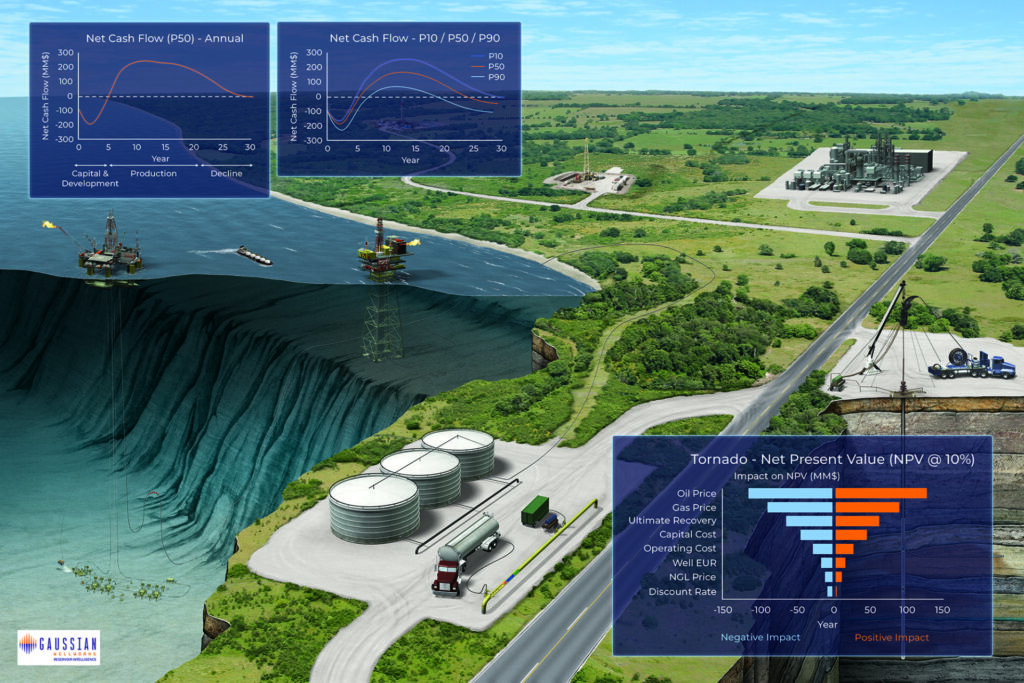
Improve reserve estimates, asset valuation, and field development planning
Services
-
Economic Appraisal
-
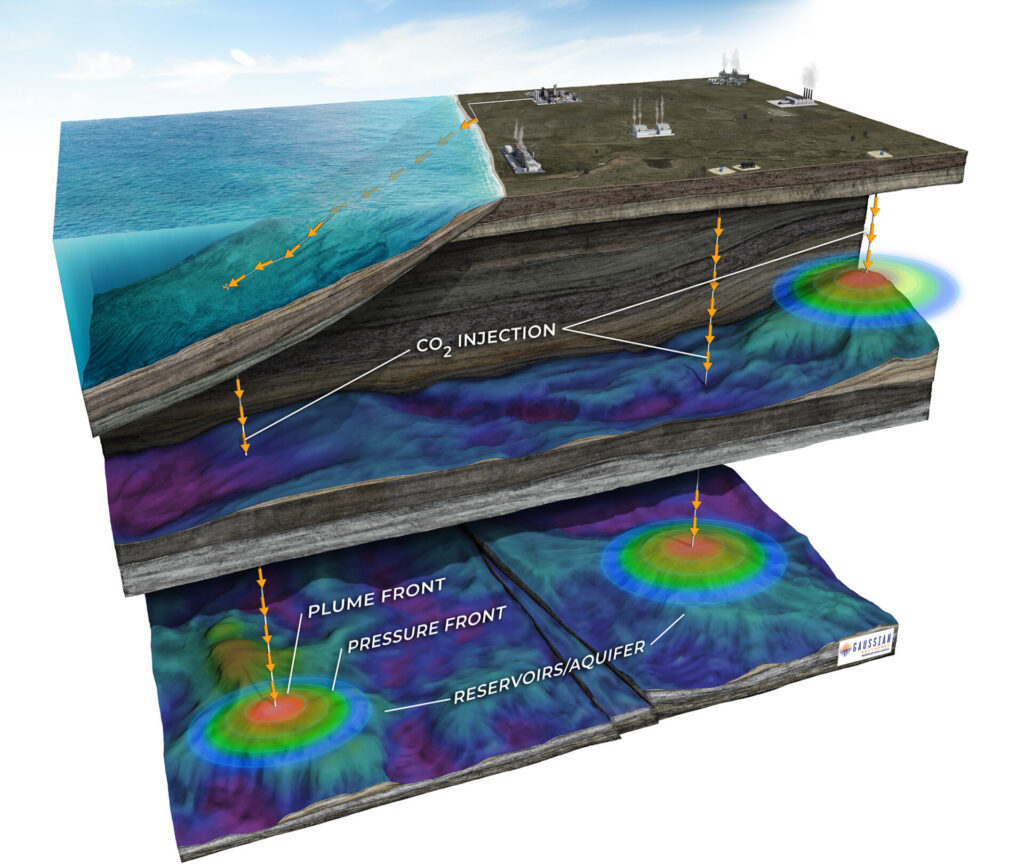
Carbon Storage Estimation
-
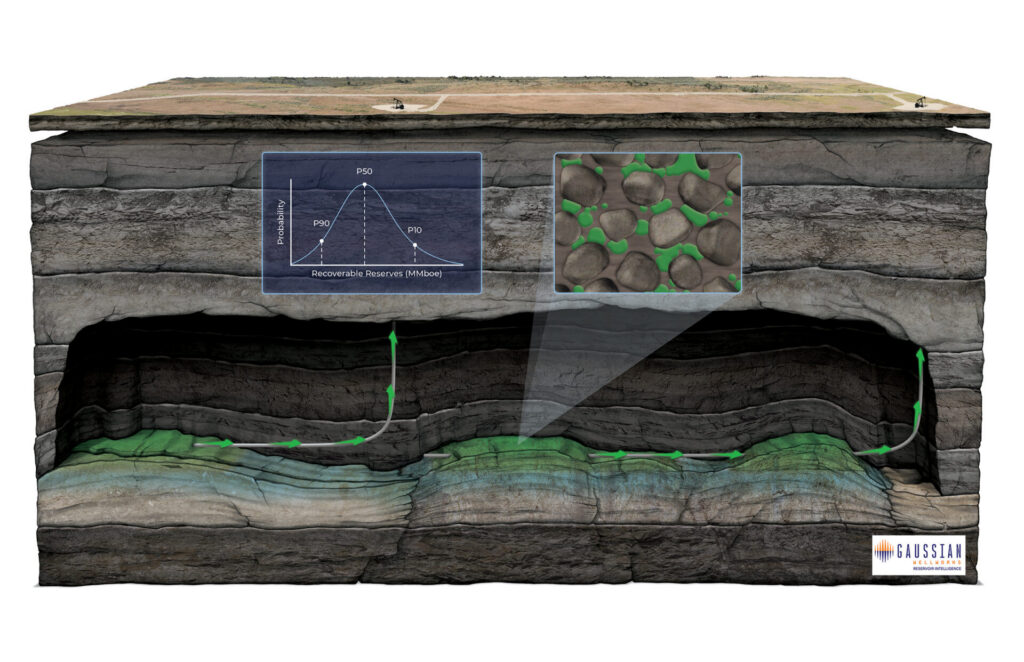
Reserves Estimation
-
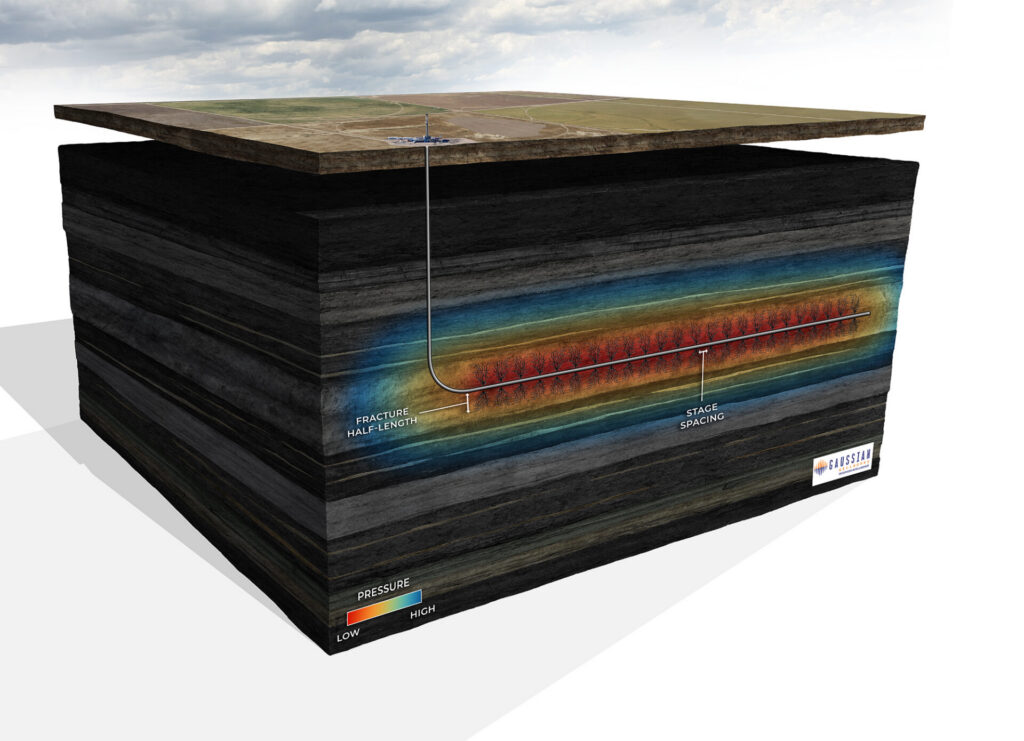
Production Optimization
-
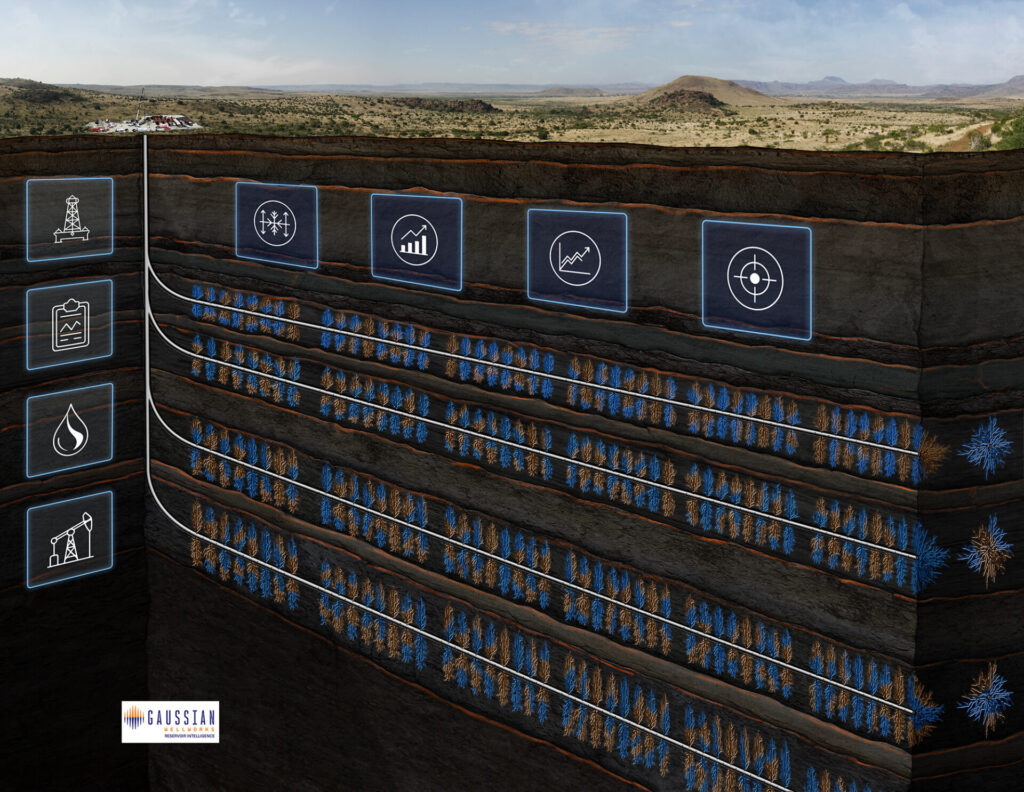
Fracture Diagnostics
-
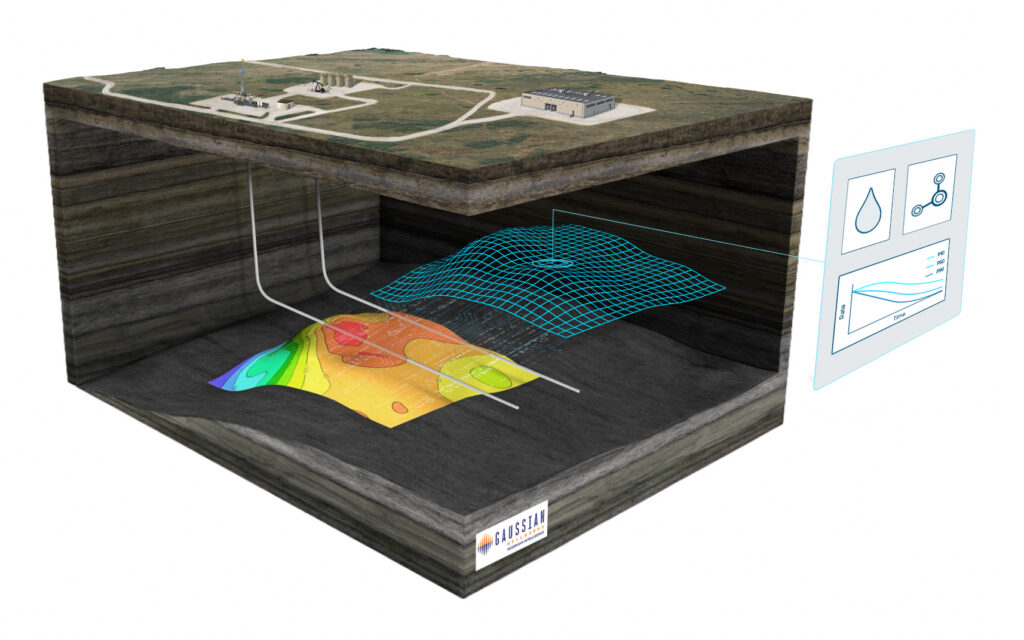
Digital Reservoir Twins
Applications and Use Cases
Gaussian technology is relevant across a wide range of subsurface energy and fluid-flow applications, including:
- Unconventional oil and gas wells
- Conventional reservoirs
- Hydraulically fractured horizontal wells
- Vertical wells
- Injection wells
- Pressure-supported and bounded reservoir systems
- Water production
- Geothermal applications
- Fluid disposal and storage studies
- Carbon and gas storage screening contexts
It is especially valuable when clients need to:
- Evaluate wells earlier
- Screen undeveloped locations
- Compare completion strategies
- Understand fracture-spacing effects
- Improve confidence in forecasts
- Support reserve or development planning with stronger technical backing
- Bridge technical analysis and business decisions more effectively
Modeling Workflow
From data ingestion and model execution, to output generation and final deliverables.
Data Integration
Range-based data appropriate to the selected engagement are gathered
Probabilistic Modeling
Uncertainty distributions are generated for the integrated data
Physics-Based, Probabilistic Modeling
- Application-specific physics and coupled behaviors
- Uncertainty-aware inputs and distributions
- Scenario-based and auditable technical evaluation
Data Review, Analysis, & Key Deliverables
Review data, identify trends, generate insights, visualize findings, recommendations, and deliverables
Technical Credibility
Gaussian technology is grounded in a published body of work covering Gaussian pressure-transient solutions for porous media, well-rate solutions for wells under constant bottomhole pressure, transient flow, streamlines, potential functions, multi-fracture interference, coupled pressure superposition, history matching, and benchmarking against field data and independent simulation workflows.
This work shows that Gaussian methods can be used not only for forecasting, but also for understanding pressure depletion, well productivity, fracture interference, and flow behavior in a technically rigorous way.
Engagement Protocol
From data to decision — the engagement protocol is designed to improve traceability, technical quality, and client confidence.
Discovery & Alignment
Clarify project goals, reservoir characteristics, decision drivers, stakeholders, and timeline.
Confidentiality & agreement
Strict confidentiality agreement for data protection.
SOW & proposal Contract
Scope, deliverables, timeline outlined and engagement contract executed.
Project kickoff
Internal and client teams aligned on workflows, milestones and points of contact for the engagement.
Data requirement definition
Data checklist tailored to project requirement is handed to client.
Data submission & secure transfer
Secure data transfer via encrypted FTP per client preference
Data acquisition, QC & inventory
Data inventory, format checks, depth/time alignment, gap identification
Advanced analysis & modeling
Appropriate workflow is executed for each engagement
Interim results review
Run analysis shared with client with feedback and interpretation
Final deliverables & support
Final reports with simulations, analysis, recommendations, and ongoing support